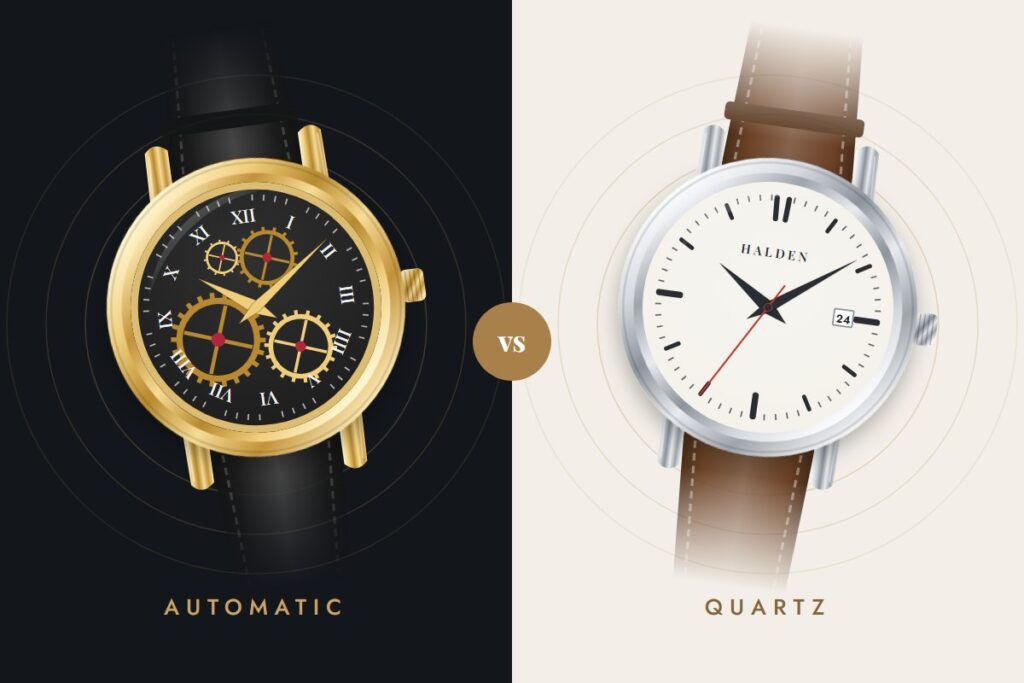
The movement is the engine of a watch. Most watches use one of two: quartz or automatic.
Quartz: accurate and easy
A battery sends a current through a tiny quartz crystal, which vibrates 32,768 times a second. Quartz watches lose only a few seconds a month, need a battery every 2–3 years and cost less.
Automatic: a little machine
An automatic is wound by a rotor that spins as you move your wrist. No battery — just springs, gears and jewels. It gains or loses a few seconds a day and needs a service every 4–5 years, but many people love watching it work through an exhibition case back.
Which one should you buy?
- Choose quartz for a grab-and-go watch that is always right.
- Choose automatic if you enjoy craftsmanship and wear your watch most days.
- Keep an automatic running on a watch winder when you rotate between watches.